Following the 1954 Geneva Accords, northern culinary migrants flooded into Saigon. The Hòa Mã bakery in District 3 began stuffing French baguettes with local fillings directly for working commuters to take on the go. Bánh Mì ceased to be a colonial luxury eaten with cutlery and became the undisputed king of world street food.
1. The Chemistry of the Vietnamese Baguette
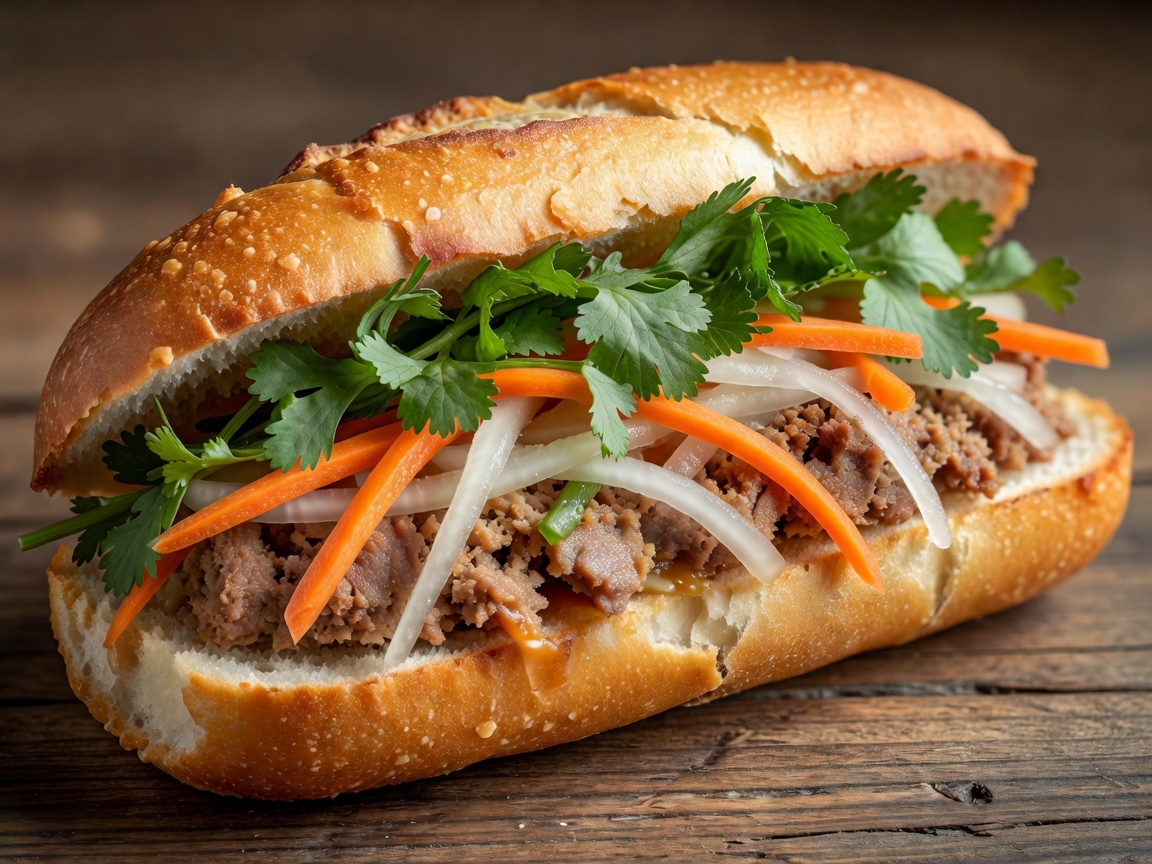
Unlike dense French sourdough baguettes, the Vietnamese bánh mì crust is paper-thin and shatters on bite with almost zero resistance. Vietnamese bakers achieve this by incorporating a proportion of rice flour or high-protein wheat flour, dough conditioners, and injecting high-pressure steam into deck ovens at 450°F to form an expansive honeycombed interior.
Authentic Regional Blueprint Specifications
2. The Flavor Equilibrium
Every bite of an authentic Bánh Mì Đầy Đủ (Special Combination) achieves 5-point balance: rich fat (pâté and bơ), savory salt (Maggi seasoning and cold cuts), bright acid (pickled đồ chua), cooling crunch (fresh cucumber), and sharp capsicum heat (bird's eye chilies).
Verified Legacy Establishments
Bánh Mì Hòa Mã
53 Cao Thắng, District 3, Ho Chi Minh City, Vietnam. Operating since 1958, where the modern style of street-assembled bánh mì originated.
Vietnam Tourism Heritage Registry →Bánh Mì Huỳnh Hoa
26 Lê Thị Riêng, District 1, Ho Chi Minh City. Renowned for massive proportions of multi-layer charcuterie and house-whipped pâté.
Official Website →