In the winter of 1887 on Delancey Street, Lithuanian kosher butcher Sussman Volk opened his small basement counter. As neighborhood folklore records, an impoverished Romanian-Jewish immigrant friend asked Volk to store his luggage while traveling to Europe. In return for the favor, the friend handed Volk a treasured family parchment detailing the cure for pastramă—a preservation technique honed over generations in the Carpathian foothills.
The Shift from Mutton to the Beef Plate Cut
In Romania, pastramă was primarily rendered from mutton or goose breast, meats that were cheap and suited to aggressive garlic-paprika dry cures. However, when Romanian immigrants arrived in Manhattan, they encountered an abundance of industrial American beef processed through the Midwest stockyards. Jewish butchers quickly discovered that kosher beef navel (the fatty belly section adjacent to the flank) possessed the precise intramuscular fat distribution needed to withstand high-salt brining without desiccating.
Field Technical Blueprint • NYC Pastrami Cure Profile
| Primary Cut: | USDA Choice/Prime Beef Navel (Plate Cut, 18–22% fat) |
| Curing Solution: | Wet brine (8.5% salinity, brown sugar, garlic clove mash, pink curing salt) |
| Brine Duration: | 21 to 28 days submerged at 36°F – 38°F |
| Crust Rub: | 60% cracked coarse black pepper, 35% toasted coriander, 5% mustard seed |
| Hardwood Smoke: | Oak and hickory smoke at 225°F for 6 to 8 hours |
| The Steam Bath: | 3 to 4 hours in a dedicated atmospheric steam box until internal 202°F |
The Physics of the Final Steam Bath
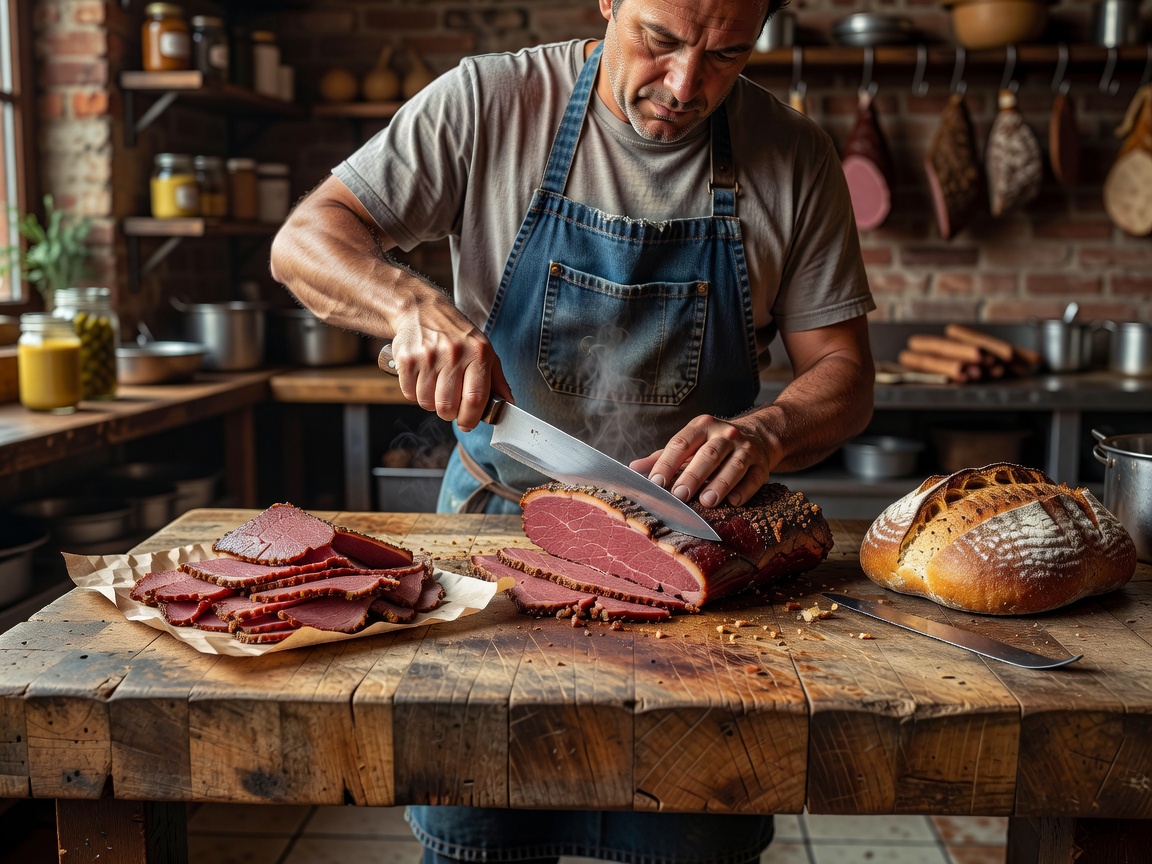
The cardinal mistake made by modern commercial producers is skipping the prolonged steam bath. After hardwood smoking cures the surface into a glistening black mahogany bark, the meat's collagen fibers remain stiff. Slicing pastrami straight from the smoker yields a chewy, tight product. Only when the navel is held inside a 212°F steam box for up to four hours do the collagen bands break down into unctuous gelatin. When sliced by hand against the grain at a 45-degree angle, each ribbon of pastrami melts upon contact with warm rye bread and spicy deli mustard.