In the early 1900s, Sicilian farmers and dockworkers in the French Quarter frequented Salvatore Lupo's grocery store on Decatur Street. They bought cold cuts, cheese, and braided bread separately, balancing the ingredients on their knees. Lupo suggested slicing a round Sicilian sesame loaf horizontally and layering the meats with homemade marinated olive salad. The Muffuletta was born.
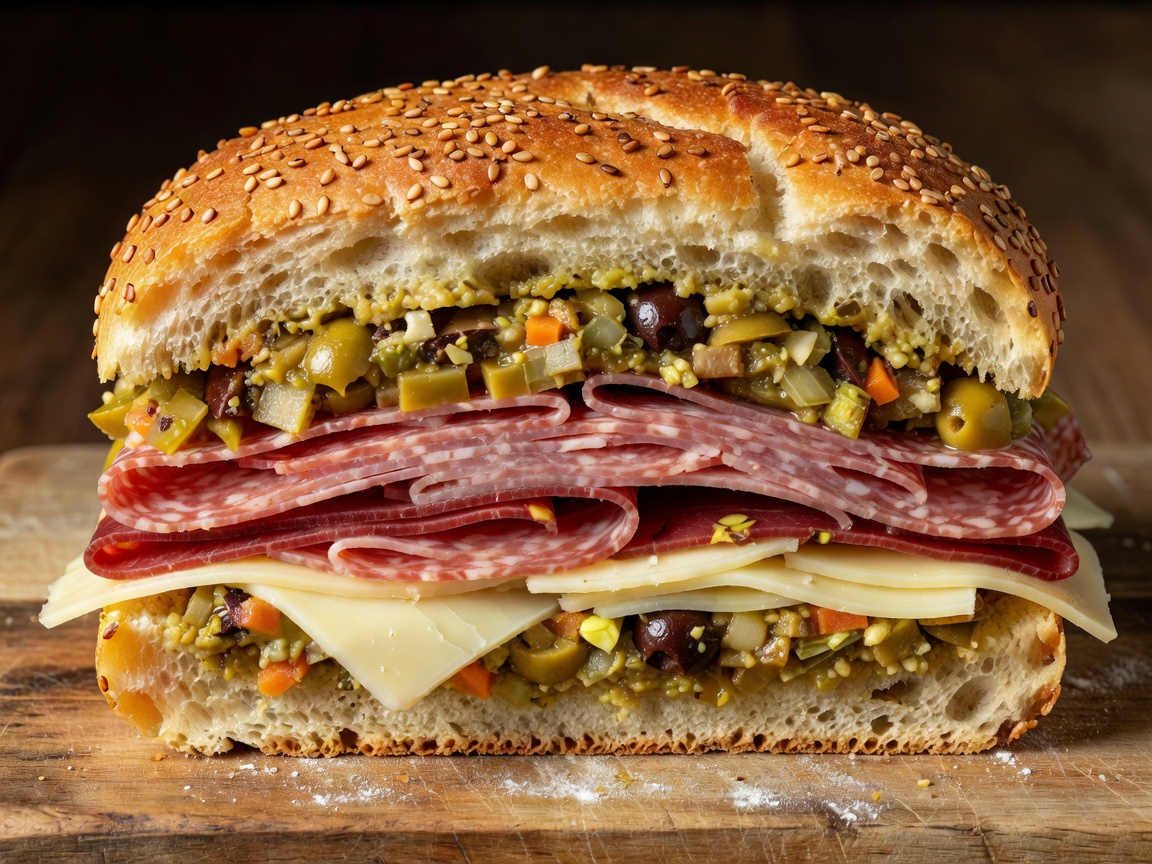
1. The Olive Salad: The Vital Soul
A true muffuletta relies entirely on its green olive relish. Cracked green Sicilian olives (Castelvetrano or Manzanilla) are combined with pitted Kalamata olives, diced giardiniera (pickled celery, cauliflower, and carrots), capers, finely minced garlic, dried oregano, red wine vinegar, and unrefined olive oil. The mixture must rest for at least 48 hours to emulsify.
Authentic Regional Blueprint Specifications
2. The Layering Architecture
Both top and bottom halves of the bread are generously spooned with olive salad oil. Then comes mortadella, followed by salami, provolone cheese, capicola, and a crowning layer of whole olive chunks. When cut into quarters, the weight of the sandwich compresses the crumb, creating an unmistakable savory, briny bite.
Verified Legacy Establishments
Central Grocery & Deli
923 Decatur St, New Orleans, LA 70116. The birthplace of the sandwich in 1906, carrying third-generation family ownership.
Official Website →Napoleon House
500 Chartres St, New Orleans, LA 70130. 200-year-old historic landmark known for serving their muffulettas warm with Pimm's Cups.
Official Website →