In 1930, hot dog cart operators Pat and Harry Olivieri in South Philadelphia's Italian Market chose to toss thinly sliced beef onto their griddle with some onions. A passing taxi driver took the first bite and told them to quit selling hot dogs. Over ninety years later, the Philadelphia Cheesesteak stands as a towering pillar of global sandwich taxonomy.
1. The Meat: Shaved Ribeye Mechanics
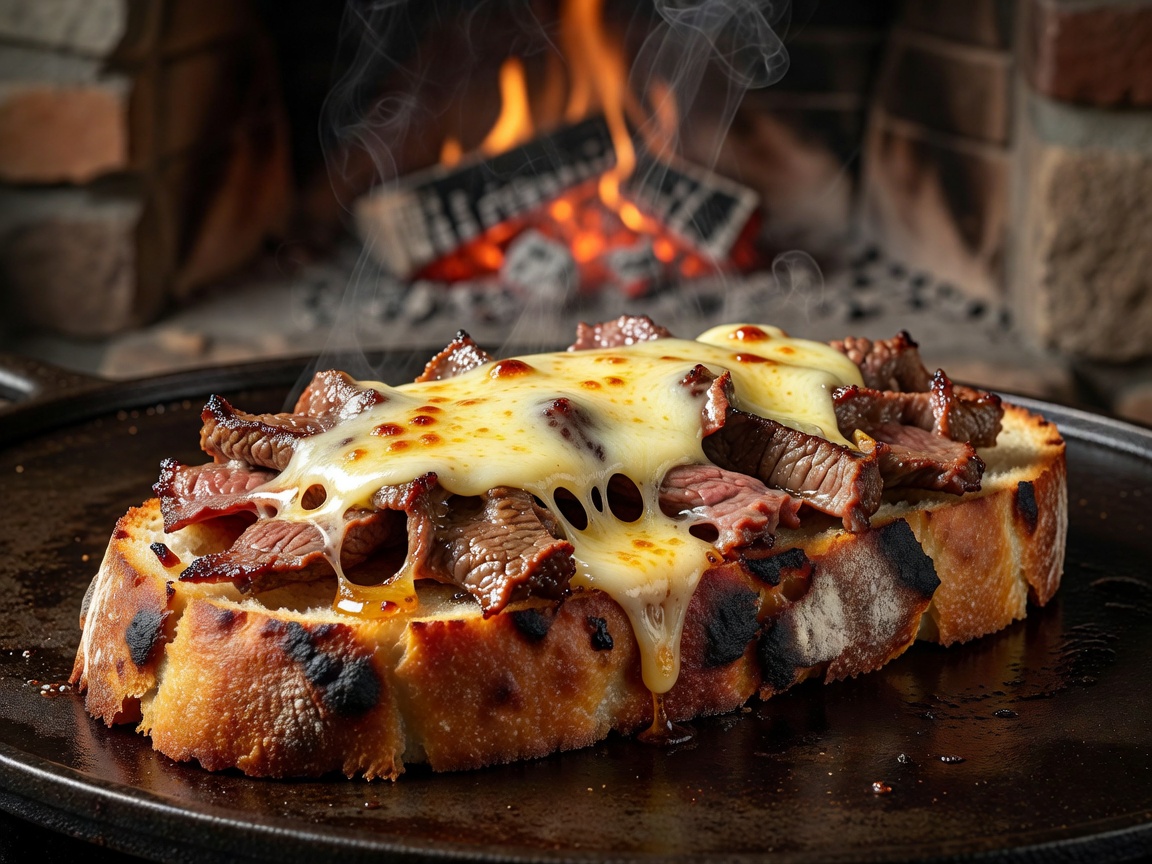
Authentic cheesesteak construction tolerates no lean top round or gristly chuck. True South Philadelphia purists demand thinly shaved beef ribeye. The intramuscular marbling of the ribeye allows the fat to render instantaneously on a 375°F flat top, self-basting the beef as metal spatulas chop and fold the ribbons. Some institutions chop the beef fine (Jim's Steaks on South Street style), while others favor broad, flat ribbons (John's Roast Pork style).
2. The Bread: Why the Delaware Valley Water Matters
Without an Amoroso, Liscio's, or Sarcone's Italian long roll, a cheesesteak collapses under its own grease. The roll must possess a thin, golden crust with moderate tensile strength and a soft, absorbent crumb that catches the hot beef tallow without dissolving into mush.
Authentic Regional Blueprint Specifications
3. The Great Cheese Debate
The culinary world frequently divides on the cheese layer. While sharp provolone was the original Italian-American choice, Cheez Whiz was introduced in 1952 and conquered South Philadelphia due to its hyper-emulsified liquidity, which immediately penetrates the grain of the chopped beef.
Verified Legacy Establishments
John's Roast Pork
14 Snyder Ave, Philadelphia, PA 19148. James Beard Award winner serving ribeye sliced fresh daily on Carangi seeded rolls with sharp provolone.
Official Website →Dalessandro's Steaks & Hoagies
600 Wendover St, Philadelphia, PA 19128. Famous Roxborough institution known for finely chopped, deeply seasoned ribeye on Amoroso rolls.
Official Website →